
Slovak Authorities Change Business Residence Permit Renewal Rules
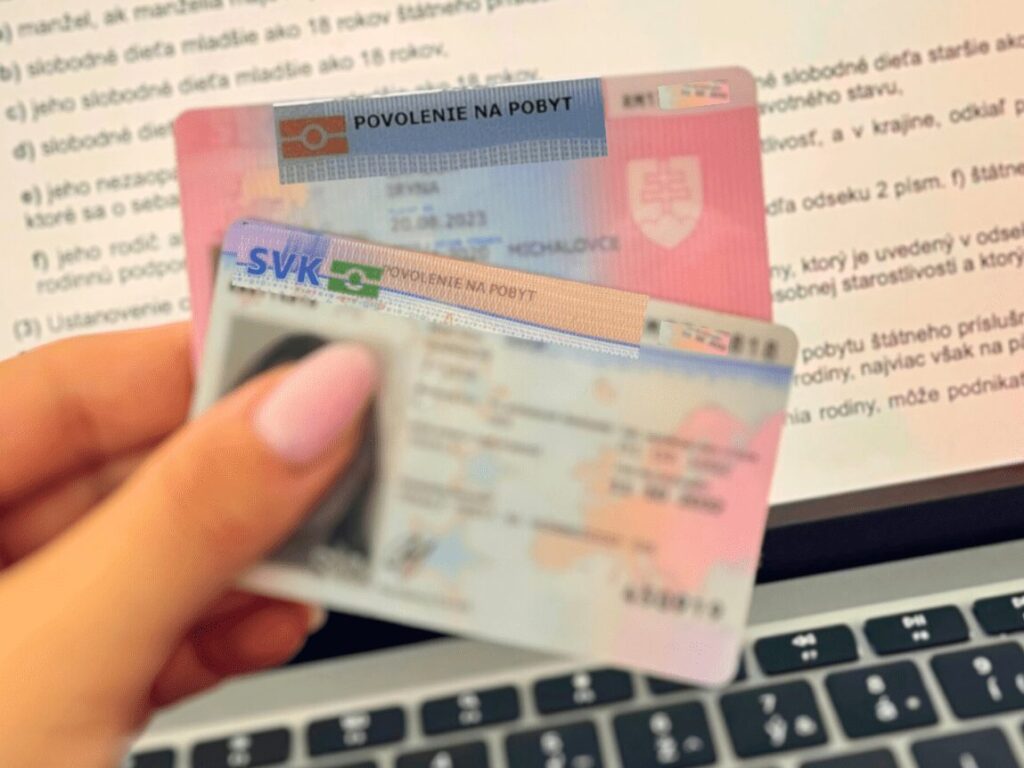
The Slovak Cabinet has approved a project of extensive changes to the law on the residence of foreigners, which, among other things, introduces important changes to the rules for renewing residence permits (RP) for entrepreneurs. If approved by parliament and the president, the new rules will come into effect on 15 July 2026.
Relaxation of Income Requirements
One of the key changes concerns the criteria for assessing the economic activity of a foreign entrepreneur. Previously, when renewing the RP, the main focus was on net profit (i.e., after tax). Specific thresholds were also in place — for example, 20 subsistence minimums for sole traders (živnostníci) and 60 subsistence minimums for companies.
Now it is proposed to completely abandon this system. Instead, new, much more lenient criteria are introduced:
- for sole traders, it will be sufficient to confirm taxable income exceeding the minimum threshold at which the obligation to file a tax return arises (in 2025, this is 2876.90 euros);
- for legal entities (companies) — to confirm the payment of the minimum profit tax, which currently amounts to 340 euros per year.
Thus, the requirements for the actual profitability of the business are significantly reduced. Formally, this means that an entrepreneur may have minimal turnover or even not generate profit at all, yet still retain the right to renew the RP.
This point raises many questions. On one hand, it clearly eases conditions for foreigners, reducing financial burdens and business performance requirements. On the other — the state’s logic regarding the support and regulation of foreign entrepreneurship remains unclear.
In particular, situations are possible where a sole trader declares minimal income, does not pay profit tax, limiting themselves to mandatory insurance contributions only. Or a company effectively does not operate, submits zero reports, and limits itself to paying the minimum tax. Under the new rules, in both situations, the RP can still be renewed.
Tightening Control Over Debts
Amid the relaxation of income requirements, control over the financial discipline of entrepreneurs is significantly strengthened. Previously, the absence of debts was checked only at the time of applying for RP renewal (and the applicant had about 20 days to settle them if identified), but now a fundamentally different approach is proposed.
The absence of debts to state bodies (tax office, customs, social and medical insurance) becomes a constant obligation for the foreigner throughout their stay in the country.
This means that the presence of debt can be recorded by the relevant authority at any time, information about it can be passed to the immigration police, which, in turn, can become grounds for RP cancellation.
At the same time, it is assumed that short-term or technical debts arising for objective reasons — for example, due to payment delays or administrative errors — will not be considered in practice. The main focus will likely be on cases of long-term or problematic debts, especially if they are difficult to collect.
Nevertheless, under the new rules, any presence of debt creates a potential risk for the foreigner’s status, requiring a much more careful approach to financial obligations.
Abolition of Exceptional Grounds
Another important change is the abolition of the possibility to renew the RP based on an exceptional decision by the Ministry of Economy. Previously, this mechanism allowed the residence permit to be retained even if the business did not meet established economic indicators.
With the introduction of the new rules, this option disappears, making the system more formalised and depriving entrepreneurs of a “safety cushion” in non-standard situations.
Not Just Business: What Else Changes for Foreigners
The package of amendments to the law affects not only entrepreneurs but also practically all key aspects of foreigners’ lives in Slovakia — from visas and employment to long-term residence and refugee status. Overall, a unified logic is traced: the state aims to simplify and speed up procedures through digitalisation, but at the same time makes the system more formalised and strengthens control.
In visa policy, the changes are of a dual nature. On one hand, the duration of the national visa is increased from 90 to 120 days, giving more time for document processing after entry. On the other — the procedure itself becomes stricter: personal submission will be required more often, clear document requirements are introduced, and grounds for refusals are standardised. At the same time, visas will remove the link to a specific employer, which should simplify foreigners’ mobility in the labour market.
A serious emphasis is placed on digitalisation. The authorities plan to move the submission of RP applications online, reduce the number of paper certificates, and establish data exchange between departments. For example, residence confirmation can be arranged through electronic systems, and the police will be able to independently verify property data. However, along with this, more stringent procedural frameworks appear — in particular, a limited time for providing missing documents.
Changes will also affect the labour market. For the first time at the legislative level, clear restrictions on the period of unemployment are introduced: it will depend on the length of stay in the country. Foreigners will also be required to notify the police of job loss and change within the established timeframe. This makes the status more dependent on formal compliance with the rules than before.
A separate block concerns Ukrainians with temporary protection. Its automatic extension is limited to mid-2027, after which a transition period is provided, during which it will be possible to switch to a standard RP in a simplified manner. At the same time, some requirements for long-term residence are eased, for example, in terms of language proficiency confirmation.